Your client asked you a question last month that you couldn’t answer. Probably something like “why doesn’t ChatGPT mention us?” or “can you handle our SEO too?” You said you’d look into it. This article is what looking into it should tell you.
White label SEO is an old model. An outside team does the search work, your agency puts its name on it, the client never knows. Agencies have run this arrangement for fifteen years. What changed in 2026 is what the work has to cover. Rankings alone don’t answer the ChatGPT question, and clients are asking the ChatGPT question.
The model in one paragraph
You sign a client for SEO. You brief us. We audit, build the strategy, write the content, fix the technical layer, track results. Everything we produce carries your logo, your report template, your domain if you want. You present it, you bill the client, you keep the difference between what the client pays you and what you pay us. The client deals with you and only you.
That’s it. The rest of this article is the fine print, and the fine print is where these partnerships succeed or quietly fall apart.
What a serious white label package covers now
Ask any provider what’s included and you’ll get the same list: technical SEO, content, links, reporting. Fine. That list was complete in 2022. It isn’t anymore.
Here’s what we’d argue belongs in the package in 2026:
**Technical SEO.** Crawl health, rendering, Core Web Vitals, indexation, schema. Boring, foundational, non-negotiable. If your provider’s own site has broken JSON-LD, ask them why.
**Content that reads like a person wrote it.** AI-generated filler is the fastest way to lose rankings under Google’s current spam policies, and it’s an even faster way to embarrass your agency in front of a client who actually reads their own blog. We use AI heavily in research and drafting. The published voice goes through a senior editor with an anti-AI style pass, because “delve into the ever-evolving landscape” is a tell, and clients notice tells.
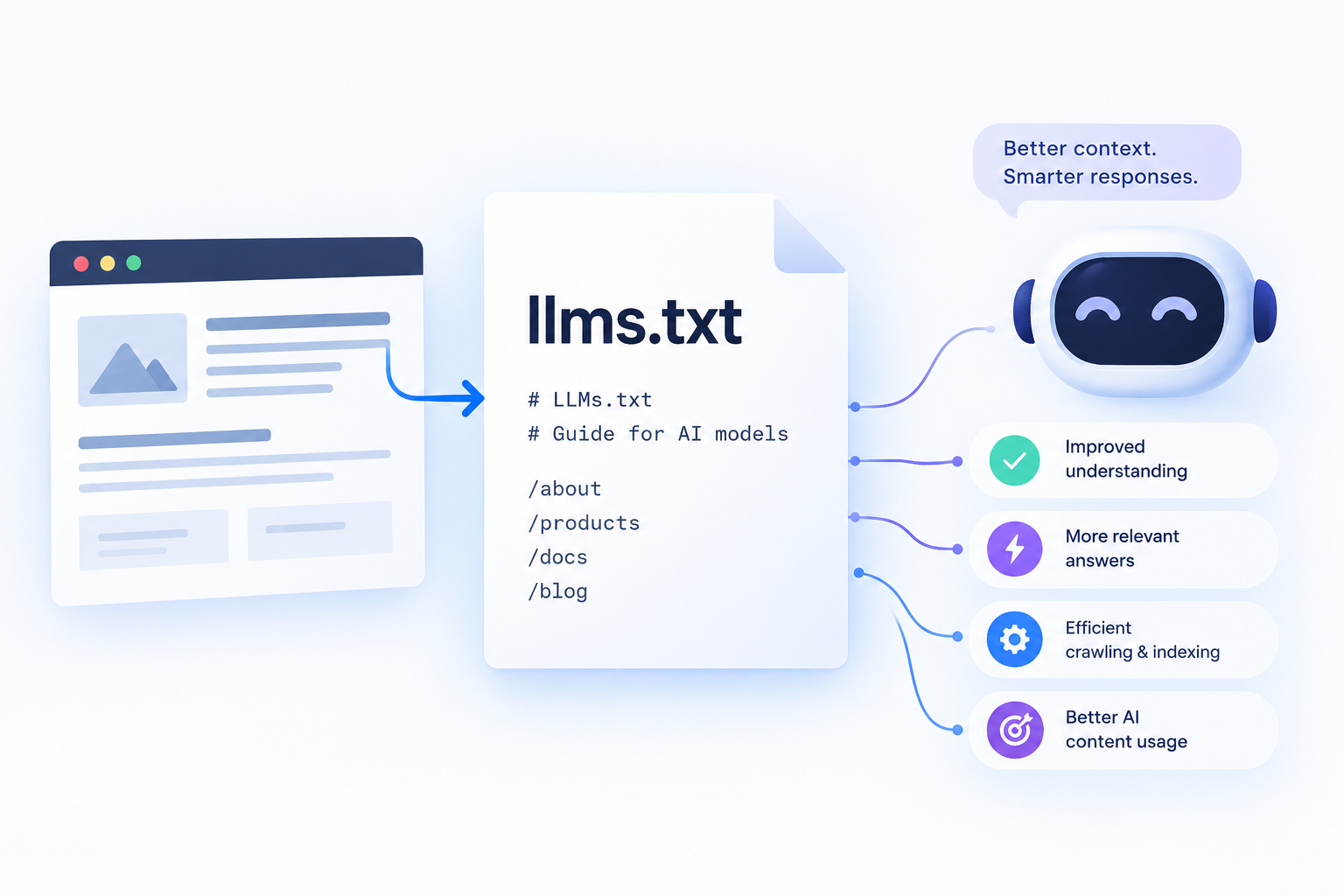
**AEO and AI visibility.** This is the part most white label providers bolted on last year as a slide in their pitch deck. It should be delivery, not a slide. Concretely: auditing where the client appears (or doesn’t) in ChatGPT, Claude, Gemini, and Perplexity answers, identifying which competitors get cited instead, restructuring content so language models can extract and attribute it, and tracking AI referral traffic month over month. We audit our own AI visibility with the same scorecard we use for clients. Ours started at 24/100. We tell people that, because the honest number is more useful than a vanity one.
**Reporting your client can actually read.** Your brand on it, business metrics in it (leads, revenue-adjacent numbers, AI citation counts), no third-party portal login that gives the game away.
**A named strategist.** Someone who knows the account, can join your client calls under your brand if you want that, and doesn’t rotate out every quarter.
The step-by-step, without the euphemisms
**1. Onboarding.** We learn how your agency works and collect your brand assets. Report templates, colour codes, sometimes an email address on your domain for our strategist. One honest note here: this step takes two to three weeks to do properly, and providers who promise “live in 48 hours” are skipping it.
**2. Client brief.** You tell us who the client is, what they sell, what they’ve been promised, and what’s gone wrong before. That last part matters more than agencies expect. Half the accounts we take over carry damage from a previous cheap provider.
**3. Audit.** Technical crawl, content inventory, backlink profile, and an AI visibility baseline. The baseline is the number the whole engagement gets measured against, so we’d rather it be uncomfortable and accurate.
**4. Strategy sign-off.** The roadmap goes to you, never straight to the client. You push back, we adjust, then work starts.
**5. Execution.** Content ships, fixes go live, links get built. You get progress updates on a cadence you choose. Weekly for new accounts is our default because silence is where agency-provider trust dies.
**6. Reporting and iteration.** Monthly branded reports, quarterly strategy reviews with you. Roadmaps change when algorithm updates land. Anyone who tells you their roadmap survived 2026’s core updates untouched is either lucky or not looking.
The money, plainly
Typical agency markup on white label SEO runs somewhere between 20% and 50%. Where you land depends on how much you add: client handling, strategic framing, the trust you’ve already built. A high-touch agency managing a demanding client in a regulated niche earns the top of that range. A pass-through arrangement earns the bottom.
There’s a second margin lever people talk around: delivery cost. AI-assisted execution has genuinely compressed the hours behind audits, research, and reporting. That saving either becomes your margin or the provider’s, depending on who you partner with. Our delivery team sits in Noida with senior oversight, our client-facing structure covers DACH, UK, US, and EU markets, and that geography is a cost advantage we pass through rather than pocket entirely. We’re saying that plainly because every provider has a cost structure and most pretend they don’t.
One caveat. Cheap white label SEO exists and it’s cheap for a reason. If the per-page content rate looks too good, the content is unedited model output, and you’ll be the one explaining a rankings drop to your client eight months from now.
White label isn’t your only option
Three arrangements, honestly compared:
**White label.** We’re invisible. You own everything the client sees. Right when you want SEO positioned as a core service your agency delivers. Most control, most responsibility.
**Referral.** You introduce us openly, we work with the client directly, you take a commission. Least work for you, least control, and the client relationship partly migrates to us. Some agencies are fine with that. Know whether you are before choosing it.
**Collaboration.** We’re visible as a specialist partner. You lead strategy and the relationship, we handle the search and AI visibility layer under our own name. Works well for PR and branding agencies who want the expertise without claiming they built it.
We run all three. Agencies sometimes start with referral to test us and move to white label once the trust exists. That progression is normal and we’d rather you take it than sign a big invisible partnership with a provider you’ve never watched work.
How to vet a provider (including us)
Questions worth asking before any contract:
– Can you show white label references specifically, from agencies, under NDA-safe terms? SEO skill and white label discipline are different competencies.
– What’s your client-contact policy in writing? “We never surface without permission” should be contractual, never verbal.
– Show me an AI visibility audit you’ve actually run. If they can’t produce one in a sanitised form, the GEO line on their site is decoration.
– Where exactly does AI do the work, and where does a human check it? Vague answers here predict quality problems later.
– What happens when three of my clients ramp up in the same month? Capacity planning is unglamorous and decisive.
– Do you help before the sale? Preliminary audits and pitch support cost a good provider little and win you the account in the first place.
One more that almost nobody asks: what does your own site look like against your own standards? Run the provider’s domain through a crawler and an AI visibility check before the first call. It’s five minutes and it’s the most honest reference they’ll ever give you.
Where this goes
Search didn’t die, it split. Google still sends most of the traffic. AI assistants increasingly shape which brands people trust before they ever click. An agency that can speak to both, with delivery behind it, is ahead of most of its local competition right now, and the window where that’s a differentiator rather than table stakes is maybe two years.
You can build that capability in-house. Realistically that’s two senior hires, six months of tooling and process, and a learning curve on LLM citation behaviour that moves under your feet. Or you can rent it, margin it, and keep your agency focused on what it’s already good at.
If you want to see what that looks like in practice, ask us for a white-labelled preliminary audit on one of your existing clients. No commitment, your branding on it, and you’ll know within a week whether the quality holds up.
—
FAQ
**What is white label SEO in simple terms?**
An external specialist does the SEO work, your agency presents and bills it under your own brand, and the end client never interacts with the provider. You control the relationship and keep the margin.
**How much should an agency mark up white label SEO?**
Between 20% and 50% is standard. Charge the higher end when you’re adding real client management and strategic framing, lower for pass-through arrangements.
**Does white label SEO include AI visibility and AEO in 2026?**
It should. Clients now ask why they don’t appear in ChatGPT or Perplexity answers, and a provider without AI visibility auditing, LLM citation tracking, and content structuring for AI extraction is selling a 2022 service.
**Will my client find out a third party is involved?**
Not if the provider runs a strict no-contact policy, delivers fully branded reporting, and works through your systems. Get the no-contact policy in the contract, never as a verbal assurance.
**Is white label SEO better than hiring in-house?**
Different trade-off, honestly. In-house gives you full control and higher fixed cost. White label gives you speed, senior expertise from day one, and flexible capacity. Agencies with fewer than five SEO retainers almost always come out ahead renting.