
Short answer: Google does not penalise content because AI wrote it. It penalises content that exists only to take up space in search results. Those are two very different problems, and mixing them up is costing companies real money.
We hear the question in almost every kickoff call. A Geschäftsführer in Stuttgart, a marketing lead at a US e-commerce brand, a product manager in Zurich. Different markets, same worry: “If we use ChatGPT or Claude for our blog, will Google punish us?”
Some agencies answer yes, because fear sells retainers. Others answer no, because cheap AI content sells volume. Both skip the part that matters, which is what Google has actually written down. So let’s go through it, policy by policy, and then talk about what we do differently for our own clients.
The rule that applies is about scale, not software
The policy Google enforces here is called scaled content abuse. It sits inside Google’s spam policies, and its key phrase is three words long: the abuse counts “no matter how it’s created.”
Read that again, because it ends most of the debate. The policy describes publishing large amounts of unoriginal pages that give users little or nothing. Generative AI appears in the policy, yes, but only as one example among several. Hiring a room full of cheap freelancers to churn out thin pages is listed too. So is stitching together scraped content.
Two things have to be true for a site to fall under this rule:
• Volume. Many pages, produced quickly, usually from a template or keyword list.
• No added value. Nothing on the page that the searcher could not find, better, somewhere else.
The tool is not on that list. Ten well-researched AI-assisted guides are outside the rule. Five hundred hand-typed location pages that differ only by city name are inside it. That is the uncomfortable truth for anyone who thinks “written by a human” is a quality badge on its own.
March 2024 was a rename, and most people misread it
Until early March 2024, the relevant section of Google’s spam policies had a different title: spammy automatically-generated content. A rule about machines.
On 5 March 2024, the same day Google started rolling out that month’s core update and spam update, the section was replaced. The new heading was scaled content abuse. The SEO industry saw a big update and a new spam policy land together and drew the obvious conclusion: Google had declared war on AI content.
The announcement said nearly the opposite. Google explained that the new policy built on the old automation rule so it could act on scaled abuse whether the content came from automation, from people, or from a mix of both. In other words, the rule got wider. It stopped asking how a page was made and started asking why it was published.
That shift matters for Mittelstand companies in particular. Many of our clients sat on old programmatic pages long before anyone had heard of large language models: product variants, regional landing pages, glossary pages built from a spreadsheet in 2016. Under the old wording, those looked safe because a person had typed them. Under the current wording, they are judged exactly like AI output. Scale plus no value. Nothing else.
“But can Google detect it?” Wrong question.
Agencies sell AI humaniser tools and detector checks as if passing one were the goal. Look at what Google itself publishes and the detector question mostly dissolves.
Google’s own guidance has been stable since February 2023. Its post on AI-generated content says appropriate use of AI or automation does not break its guidelines. The same post adds a line every content team should pin above their desk: using AI gives content no special advantage. AI changes what a page costs to produce. It does not change what the page is worth.
Quality raters are told to judge without knowing. Google’s Search Quality Rater Guidelines say plainly that generative AI can produce both high- and low-quality pages, and that the use of AI alone does not set a page’s rating. Raters are asked to give the lowest rating when several pages on a site point to scaled content abuse, even if they cannot tell how those pages were made. Raters do not move rankings directly. But if Google had a dependable in-house AI detector, it would hardly ask humans to work blind.
There is no “AI content” manual action. Search Console lists the manual actions Google can issue. You will find scaled content abuse there. You will not find anything about AI. Manual actions come from human reviewers, while the automated spam work is done by SpamBrain, which Google describes as an AI-based system. So AI-made pages end up judged by an AI that does not care whether they were AI-made.
One practical consequence: when someone shows you a traffic graph and says a site “got hit for AI content”, ask for the evidence. Google does not publish the reason behind individual penalties. Those stories are almost always inferred from a curve.
What the big studies show, and where they stop
Two large tool vendors have measured AI content in the top results this year. At first glance they disagree. Ahrefs found plenty of heavily AI-classified pages sitting in the top ten, with only a small difference in AI share between position one and position ten. Semrush found that pages its detector classed as human tended to do better than AI or mixed pages across the top positions.
They are not actually in conflict. One says AI content is not being filtered out. The other says strong human-led content still tends to win. Both can be true at once, and in our experience both are.
Read both with a pinch of salt, though. Each study depends on an AI text detector, and neither vendor publishes how often that detector gets it wrong. A draft written by a model and then reworked by a good editor will usually read as human. So these numbers measure what a detector thinks it sees. They do not measure how the text was produced, and they say nothing about cause and effect.
How we handle AI content for our clients
We use AI every day at Matrixe Zone. Research, outlines, first drafts, data extraction, internal QA. We would be lying if we said otherwise, and it would be odd for an AI-native agency to pretend. What we do not do is let a model decide what gets published. Here is the working checklist our senior team uses.
1. Audit volume before tools. Count what you published in the last 90 days, then count how many of those pages say something no other page on the web already says. If the second number is much smaller than the first, you have a scaled content problem, regardless of who typed it.
2. Start every piece from something only you have. Project data, installation photos, pricing logic, a mistake a customer made and how you fixed it. A machine builder or a regional installer has years of knowledge that no model was trained on. That is the value Google is asking for.
3. Put a real person behind every article. A named author with a working author page, a role, and a reason to be trusted on the topic. Google explicitly advises against giving an AI the byline, so don’t.
4. Cite sources a reader can check. Link to standards, regulations, manufacturer data and primary research. It costs minutes and it is one of the clearest trust signals in the HTML.
5. Disclose AI use where a reader would wonder. Google calls disclosure useful when someone might reasonably ask how a piece was made. It is not a ranking factor and not required on every page. Use judgement.
6. Clean up old programmatic pages. Merge, rewrite or noindex the thin location and variant pages from years past. Since March 2024 they carry the same risk as fresh AI spam.
7. Stop paying for humanisers. Hours spent tricking a detector are hours not spent on the substance. No published Google policy rewards it.
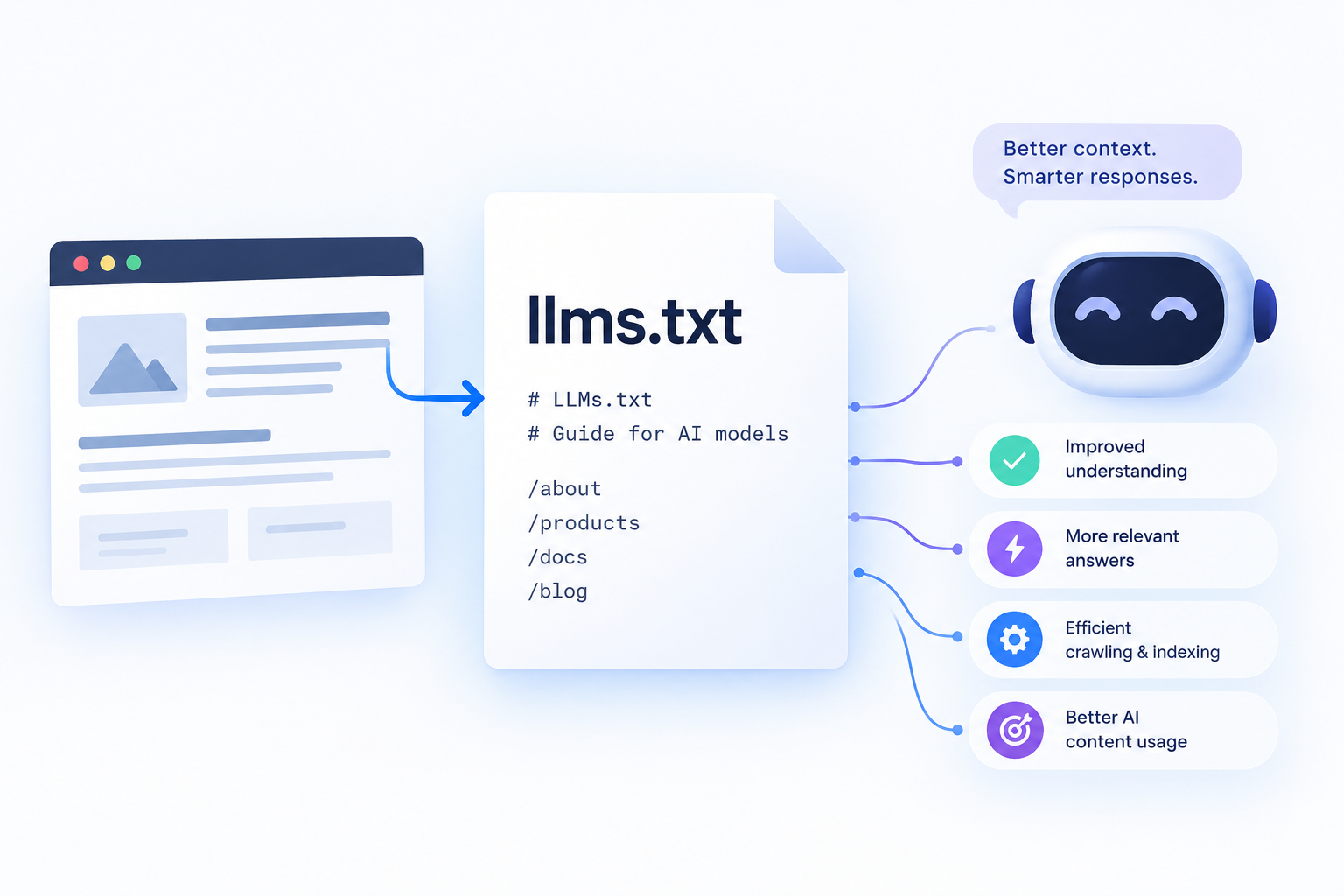
8. Don’t build special files for Google’s AI features. Google says you need no new markup or AI text files to appear in AI Overviews and AI Mode. Solid crawlable content and clean structure do the job.
Why this matters even more in AI search
Google rankings are only half the picture now. Buyers also ask ChatGPT, Perplexity, Gemini and Claude, and those systems choose which brands to cite. That is the work we do in AEO and GEO, and the lesson from it lines up neatly with Google’s policy.
Answer engines do not reward volume. They pull from pages that state something specific, back it up, and are clearly tied to a credible company or author. A hundred generic pages about “the benefits of industrial pumps” give a model nothing to quote. One page with real load-test figures, a named engineer and a clear comparison table gives it a reason to mention you.
So the same habits that keep you clear of scaled content abuse are the ones that get you cited in AI answers. Fewer pages. More substance. Clear authorship. Sources. It is not a coincidence, and it is the most useful thing to take away from this whole debate.
FAQ
Does Google penalise AI-generated content?
No. Google’s spam policies target large volumes of low-value pages published to manipulate rankings, however they were made. AI is not a violation in itself.
Can Google tell if a text was written by AI?
Google has never published an AI detector or a penalty triggered by one. Its rater guidelines ask raters to judge quality even when they cannot tell how a page was produced.
Was the March 2024 update aimed at AI content?
Not really. The old automation rule was replaced by scaled content abuse, which covers human and machine output alike. The rule became broader, not stricter on AI.
Do I have to label AI-assisted content?
No legal or ranking requirement from Google. It recommends disclosure where readers would reasonably ask how the content was created, and advises against crediting AI as the author.
Is there a Search Console penalty for AI content?
No. The relevant manual action is scaled content abuse, and it is issued by a human reviewer at Google.
Can AI-assisted pages rank on page one? Yes. Large third-party studies find AI-heavy pages throughout the top ten. Pages with clear expertise and original information still tend to have the edge.
The bottom line
Stop asking whether AI wrote it. Ask whether anyone would miss the page if you deleted it tomorrow. If the honest answer is no, it is a risk, whoever wrote it. If the answer is yes, the tool you used is your business, not Google’s.
If you want a second opinion on your content library, our senior team can review it page by page and tell you what to keep, merge or rebuild for both Google and AI search. Talk to Matrixe Zone.